Why Gravel Choice Matters More Than You Think
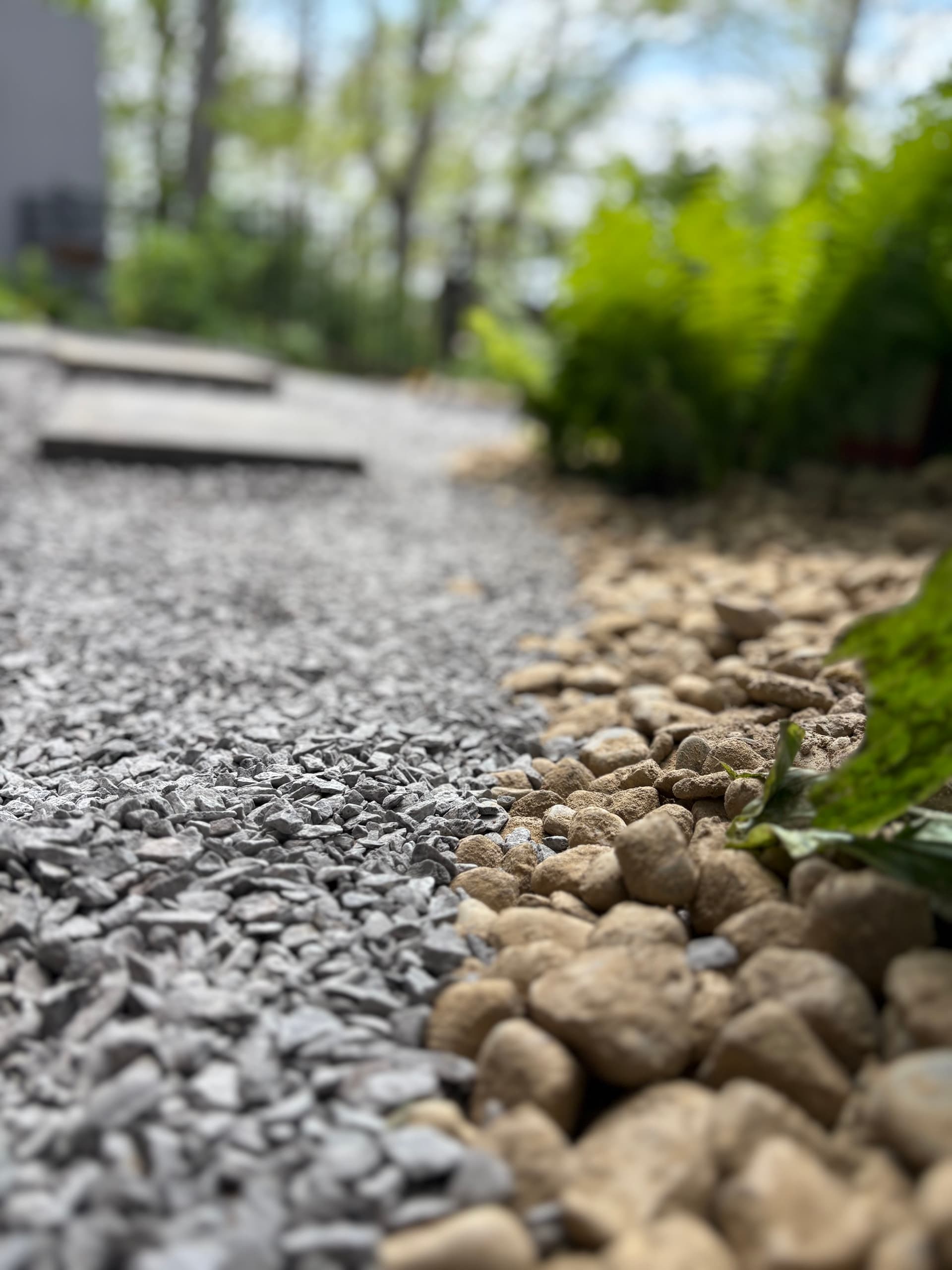
Most people pick gravel based on how it looks. And yeah, looks matter. But if that's the only thing driving the decision, you're going to end up with a path that shifts, puddles up after rain, or just doesn't hold up over time.
Here's the thing - not all gravel performs the same. Crushed stone with angular edges locks together and compacts well, making it a solid choice for high-traffic paths. Rounded river rock or pea gravel looks great as a border or accent but won't compact the same way. Using the wrong one in the wrong spot is a mistake we see pretty often on jobs where we're fixing someone else's work.
When we're planning a walkway or hardscape path, the gravel selection is part of the design conversation from the start. We're thinking about drainage, foot traffic, what's planted nearby, and how the material will hold its position over time. That clean line between two different gravel types isn't just a visual detail - it's intentional zoning. One material does the functional work, the other frames the planting bed and keeps things tidy at the edge.
The stepping stones tucked into the path add structure without making the space feel rigid. It's a look that works well in naturalistic yards where you want things to feel intentional but not overly formal. Getting that balance right comes down to material selection and proper edging - two things that are easy to overlook and hard to fix after the fact.
Good hardscaping isn't just about what you see on day one. It's about how the space holds up through rain, foot traffic, and season changes. Choosing the right materials from the start is what makes that happen.